
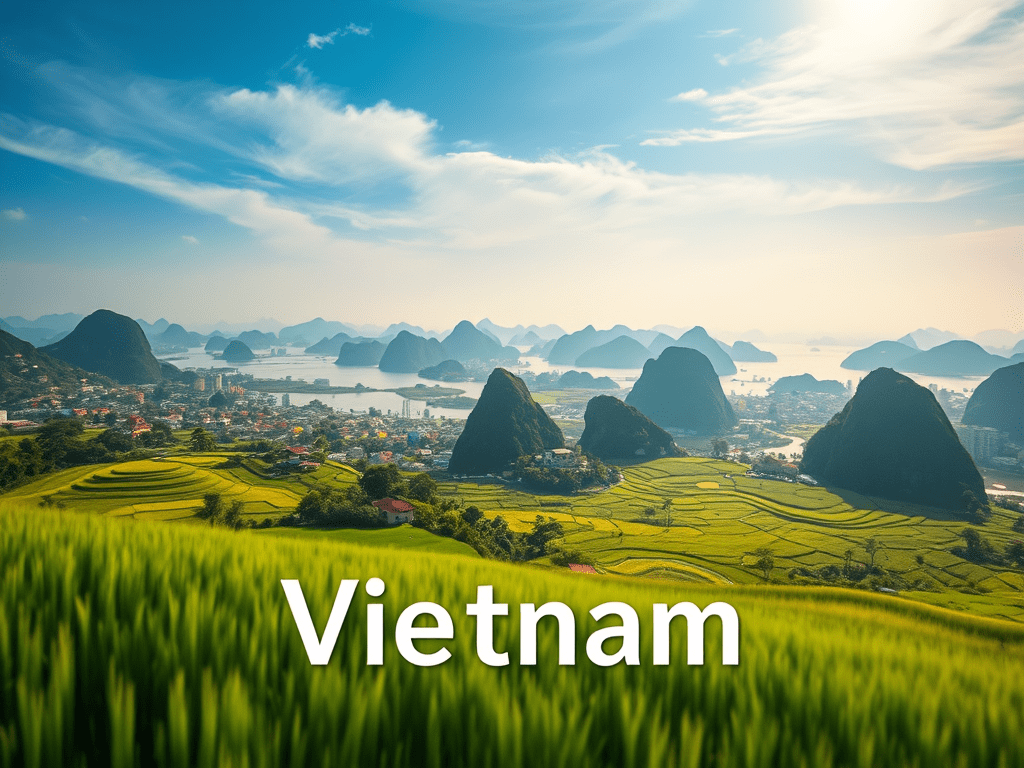
If you’re looking to expand your business globally, Vietnam is a prime destination. With a booming economy and progressive political reforms, this Southeast Asian nation offers exciting opportunities for entrepreneurs.
Vietnam’s infrastructure is highly developed, boasting some of the fastest internet connections in Asia. The country provides accessible business-friendly regulations, allowing for foreign ownership and seamless trade with minimal paperwork. Add to this a skilled workforce with high English proficiency, and it becomes clear why Vietnam attracts countless international businesses annually.
Vietnam ranks 73rd out of 190 countries in the Ease of Doing Business Index, a top position within ASEAN. This reflects the nation’s dedication to reforms, reducing bureaucracy, and lowering the cost of doing business.
Is Vietnam Good for Business?
The ease of doing business in Vietnam, alongside simplified processes and government incentives, makes it a compelling choice for investors. These incentives include tax exemptions, startup capital, and low labor costs. Strategically located, Vietnam serves as a hub for diverse business operations.
Advantages of Doing Business in Vietnam
- Low Operating Costs: Vietnam offers lower labor and overhead costs, along with a large, affordable workforce.
- Strong Economic Growth: Vietnam boasts one of Asia’s highest GDP growth rates, offering a lucrative market for expansion.
- Free Trade Agreements (FTAs): Vietnam has access to several free trade agreements, including with major economies like the EU, Japan, and South Korea, giving businesses preferential trade terms. Particularly, some of Vietnam’s trade pacts include:
- Japan – Vietnam Economic Partnership Agreement (EPA) (2008)
- Chile – Vietnam FTA (2011)
- Eurasia – Vietnam Economic Union (2015)
- South Korea – Vietnam (2015)
- EFTA (European Free Trade Association) – Vietnam (ongoing negotiations)
- Comprehensive and Progressive Agreement on Trans-Pacific Partnership (2018)
- Vietnam – European Union FTA (2019)
- Comprehensive and Progressive Agreement for Trans-Pacific Partnership As an ASEAN member nation, Vietnam has signed a number of other FTAs with Japan, China, India, Australia, New Zealand, South Korea, and Hong Kong.
- Favorable Location: Positioned between China and India, Vietnam provides access to diverse consumer markets and extensive import/export opportunities.
- Political Stability: Vietnam’s political stability enhances its attractiveness as a business destination.
- Government Support: Incentives and programs support growth and development, particularly in industries such as manufacturing and technology.
- Consumer Potential: Vietnam’s growing middle class offers a large, affluent consumer base, ideal for various industries.
- Low Tax Rates: Vietnam’s corporate tax rates are among the lowest in the region, alongside tax incentives for foreign investors.
- Modern Infrastructure: Businesses benefit from advanced telecommunications and transport networks.
- Large Customer Base: Vietnam offers access to both local and international markets, with numerous trade opportunities.
- Competitive Labor Costs: Vietnam provides a skilled workforce at highly competitive costs, supported by pro-business labor laws.
Challenges of Doing Business in Vietnam
- Complex Business Setup Process: Despite improvements, the setup process can still be bureaucratic.
- Lack of Transparency: Vietnam’s regulatory framework requires businesses to navigate through potential transparency issues.
- High Costs: Certain operational expenses, such as taxes, labor fees, and corporate overhead, can be high.
- Cultural and Language Barriers: A deep understanding of Vietnamese culture and language is crucial to succeed.
- Bureaucracy: Navigating Vietnam’s bureaucratic system can be complex and time-consuming.
- Intellectual Property (IP) Concerns: Companies must be vigilant about IP protection, given Vietnam’s evolving legal framework for IP rights.
Vietnam Business Culture
Understanding the local business culture is key to success in Vietnam, where hierarchical structures and respect for authority are highly valued. Business etiquette requires punctuality, respectful address, and an awareness of body language.
Common Business Customs in Vietnam
- Greetings: Handshakes are common, but addressing people by their title and surname is crucial.
- Gift Giving: Appropriate gifts are appreciated in business exchanges.
- Seniority: Showing respect to senior figures is a vital part of business culture.
- Language Barriers: While Vietnamese is the official language, English is widely spoken in business.
- Business Etiquette: Arrive on time, dress appropriately, and avoid controversial topics.
Maintaining “Face” in Vietnam
Maintaining personal dignity, or “face,” is essential. Avoid open disagreements, as these can harm professional relationships.
Building Relationships and Networking
Building strong relationships is essential for business in Vietnam. Networking through social events and referrals is key to establishing trust and long-term partnerships.
In conclusion, doing business in Vietnam offers remarkable opportunities, driven by low costs, government incentives, and strong economic growth. However, understanding the local culture, business etiquette, and regulatory environment is crucial for success.
 Lean Innovation Technology Co. Ltd.
Leave a comment